
Why Marco Rubio Called the Unity Palace: Understanding US Foreign Policy in a Contested Election
After the election, when Cameroonians were shouting that Biya rigged the results and Issa Tchiroma claimed victory, news broke that US Senator Marco Rubio reached out to the Unity Palace. Many misunderstood this completely. Some thought the US had chosen a side. Others thought America was endorsing a fraudulent process.
11/23/20253 min read
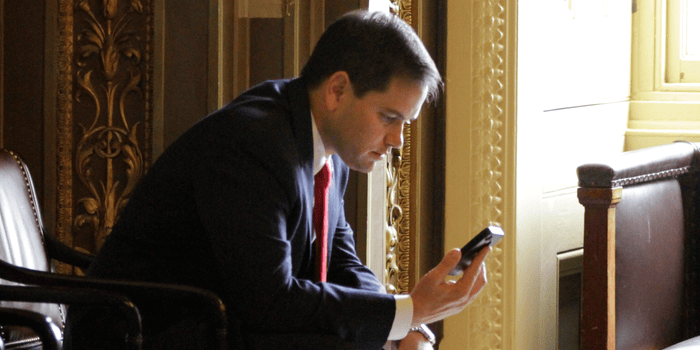
But in reality, Rubio’s call fits perfectly with how United States foreign policy works.
To understand that phone call, you must understand how America thinks, what America prioritizes, and which international partners they coordinate with before taking any position on Cameroon.
Let’s break it down clearly.
1. America Does Not Call Because They Support Someone. They Call to Protect Stability.
When elections are contested and a region is tense, the US does not pick moral winners. They reach out to whoever controls the state machinery at that moment.
Why?
Because:
he controls the military
he controls the security apparatus
he controls the territory
he holds the constitutional instruments of power
The United States cannot ignore the sitting president during a crisis.
A call does not mean endorsement.
A call means the US is managing risk.
2. Before Making a Call, the US Checks With Their Key Partners
America never acts alone in Africa. Before making a strategic call like this, they quietly assess the positions of:
1. France
Because France has deep military, economic, and intelligence influence in Cameroon.
Rubio’s team would have looked at:
France’s early reaction
Paris’s commitment to stability
any French pressure points
2. The United Kingdom
Because Cameroon was a British Trust Territory and London still influences international posture.
The US always checks UK briefings.
3. The African Union
Not because the AU is strong, but because legitimacy matters.
The US wants to avoid contradicting AU positions unless necessary.
4. Nigeria
Nigeria borders Cameroon, and any instability affects:
Boko Haram
trade corridors
refugee flows
The US cannot make a move without considering Abuja.
5. The United Nations
Especially UN Regional Offices for Central Africa (UNOCA).
They need situational intelligence before opening diplomatic channels.
6. The US Embassy in Yaoundé
They feed Washington real-time intelligence:
who controls the streets
who controls the army
who can guarantee dialogue
who can prevent escalation
Before Rubio’s call, every one of these partners had already communicated the same message:
Cameroon is tense but still under state control.
Talk to whoever controls the palace.
3. What the United States Actually Prioritizes in Cameroon
Here are the real priorities that drive US action, in this exact order:
1. Counterterrorism
The US has military presence and programs targeting Boko Haram and ISIS-West Africa.
They need a functioning Cameroonian state to continue those operations.
2. Regional Stability
Instability in Cameroon can spill into:
Nigeria
Chad
CAR
Gabon
Equatorial Guinea
The US will protect stability even more than democracy.
3. Preventing Russian or Chinese Expansion
China is building deep ties in Central Africa.
Russia is expanding through Wagner.
The US cannot afford Cameroon to slide into Moscow’s or Beijing’s orbit.
4. Protecting American Citizens and Assets
US diplomats, missionaries, NGOs, and business interests must be safe.
5. Humanitarian and Human Rights Considerations
They care, but these come after security and strategic concerns.
6. Democracy and Good Governance
Democracy matters, but the US places it after stability.
They will speak about democracy but act for stability.
This is why the US can criticize the election publicly but still call Biya privately.
4. What the Marco Rubio Call Was REALLY About
Rubio’s call had almost nothing to do with:
who won
who claimed victory
who cheated
who the people preferred
The call was about one thing:
“Is Cameroon still stable enough to protect US interests?”
The purpose of the call:
1. Confirm whether the military remains under control
The US wanted to know if there were fractures in the army.
2. Prevent the situation from escalating
If America stays silent, tensions can rise and lead to violence.
3. Ensure communication lines remain open
The US always maintains direct access to the sitting government.
4. Signal that America is watching closely
Not supporting, but watching.
5. Encourage calm and avoid a rushed crisis
A single spark can destabilize the entire region.
6. Protect ongoing counterterrorism cooperation
The US must continue its operations with Cameroon’s security forces regardless of politics.
5. The US Speaks Softly, but They Move Strategically
Here is what your people must understand:
America will empathize publicly, but they follow strategy privately.
They will say:
“We understand the concerns of the people.”
But they will act according to:
stability
security
regional balance
the fight against terrorism
strategic competition with China and Russia
This is why the call happened.
Not because Rubio supports Biya.
Not because the US believes the results.
But because the US cannot allow Cameroon to implode.
Final Message You Can Use Publicly
Marco Rubio’s call to the Unity Palace was not an endorsement. It was a strategic move. The United States checked with France, the UK, Nigeria, the AU, the UN, and its own embassy, then made a call designed to keep the region stable. America empathizes with citizens, but it acts according to its national interests. That is how US foreign policy works.
Contact
Reach out for research inquiries or collaborations.
Phone
+1 (281) 315-9387
© 2025. All rights reserved.

