
Research Areas
Article 76(b): obligations of administering authorities
Trusteeship Council records
Termination procedures and the conditions for self-government
Comparative case studies (Namibia, East Timor, Tokelau, Hong Kong)
Focus:
How incomplete decolonization creates long-term legal ambiguity.
Resolution 1608 (XV)
Requirements for a valid treaty (negotiation, signature, ratification, UN registration)
Fate of the UN-supervised conference
Absence of a deposited treaty in UN, UK, or Cameroon archives
Focus:
Explaining why the legal merger between Southern Cameroons and La République du Cameroun was never completed.
1. UN Trusteeship & International Law
2. The Missing Treaty of Union (1961–1964)
The 1972 referendum and its limitations under international law
Federal vs. unitary systems in treaty-based unions
The 1984 return to “La République du Cameroun”
Legal consequences for identity and sovereignty
Focus:
Distinguishing political acts from internationally recognized legal processes.
Why many post-colonial states inherited dysfunctional structures
The role of language, law, and institutional design
Comparative analysis: Ghana, Botswana, Rwanda, South Sudan
The psychological impact of inherited narratives vs. documented law
Focus:
How clarity, legal education, and proper governance frameworks can create stability.
3. Domestic Transitions: 1972 & 1984
4. Governance & State Formation in Africa
How elders described events without legal terminology
The difference between experience and law
The 5 Layers of Ignorance
Building a shared language that aligns with international standards
Focus:
Closing the generational gap caused by missing legal vocabulary.
5. Vocabulary & Interpretation
1. The Missing Treaty: Understanding the Uncompleted Union Between Southern Cameroons and LRC
A documented analysis of why the union envisioned in 1961 was never finalized, and its implications under international law.
2. Article 76(b): The Legal Pathway for Unfinished Decolonization
Explains how UN Trusteeship obligations apply when a treaty of union is absent.
3. The 5 Layers of Ignorance: Why Our History Was Never Explained Correctly
A generational study of how misinformation, lost vocabulary, and political storytelling shaped public misunderstanding.
4. 1972 Revisited: Can a Referendum Replace a Treaty?
A legal review comparing Cameroon’s 1972 referendum to international treaty law.
5. 1984 and the Return of La République du Cameroun
Examines the meaning and consequences of reverting to the 1960 state identity.
6. Learnéd Acceptance vs. Legal Legitimacy
How people adopt political identities without legal foundation — and why clarity matters for nation-building.
7. From Trusteeship to Nowhere: The Constitutional Void of 1961–1972
A historical breakdown of how an uncompleted legal process produced long-term instability.
Research Areas
FAQs
What is Article 76(b)?
Article 76(b) addresses decolonization of trust territories under UN oversight.
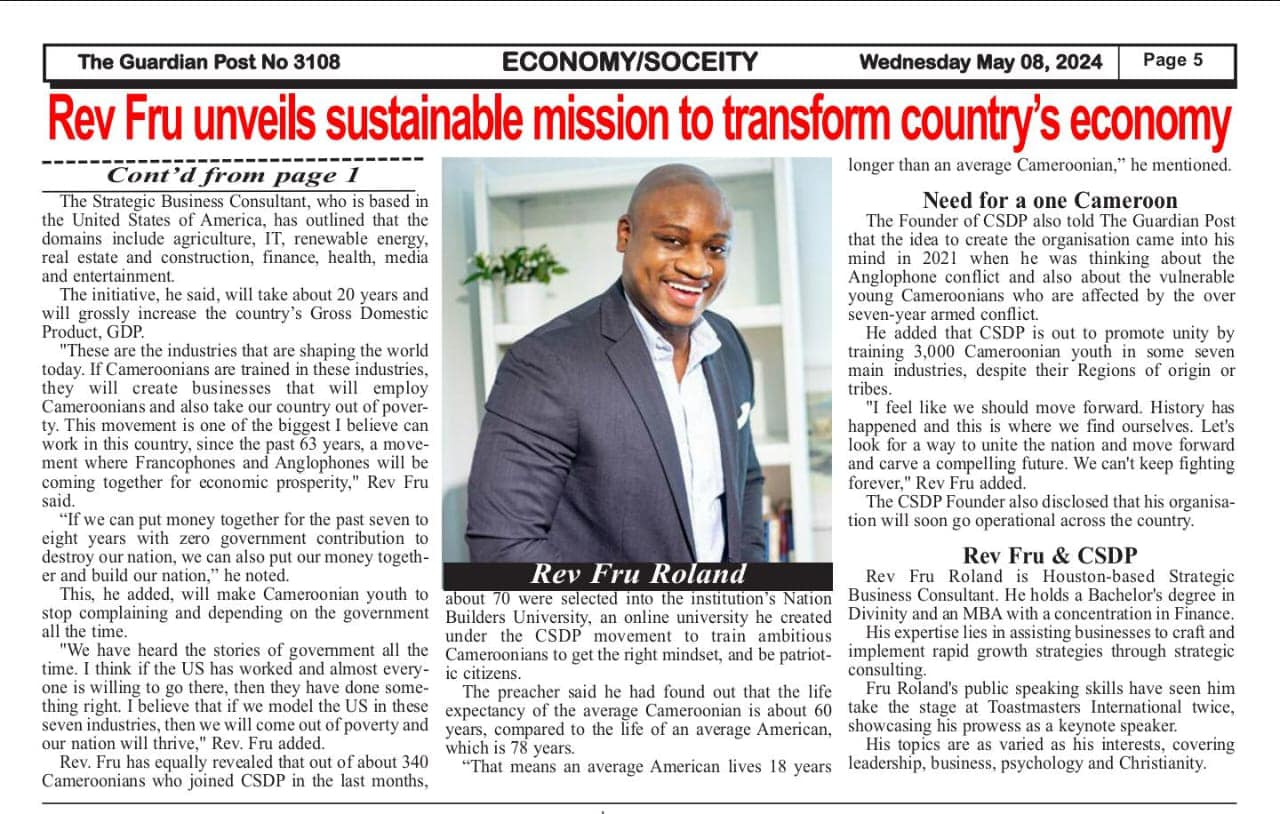
Who is Roland Fru?
What is Southern Cameroons?
How does political identity relate?
What frameworks are studied?
Roland Fru is a researcher specializing in international law and decolonization.
Southern Cameroons was a UN trust territory with a complex legal status post-independence.
Political identity shapes nation-building and governance in post-colonial African states.
The focus is on UN decolonization frameworks and international legal principles.
Contact
Reach out for research inquiries or collaborations.
Phone
+1 (281) 315-9387
© 2025. All rights reserved.

