
Why a “Gentleman’s Agreement” Was Never a Union Treaty
For years, many Southern Cameroonians have repeated the idea that “we entered into a gentleman’s agreement” with La République du Cameroun. It sounds diplomatic. It feels polite. But when you compare it to what international law actually requires, the phrase falls apart instantly. A gentleman’s agreement is not a union treaty. It never was. It never could be.
11/23/20252 min read
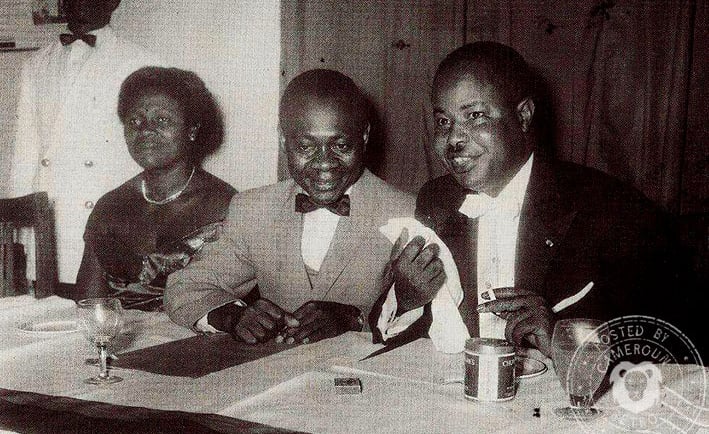
1. A Gentleman’s Agreement Is Not a Union Treaty
A gentleman’s agreement is simply an informal understanding. It is usually verbal and carries no legal force. There are no signatures, no ratification procedures, and no international recognition. It is the kind of arrangement people make when they trust each other, not when two political entities are determining sovereignty.
A union treaty is the exact opposite. It must be negotiated by the proper authorities of each party. It must be written, signed, ratified, and for trust territories, deposited with the United Nations. This is how sovereignty changes hands. This is how unions are created. One is a casual understanding. The other is a binding international instrument. They have nothing in common in law.
2. What Resolution 1608 Actually Required
Resolution 1608 (XV) never mentioned a gentleman’s agreement. It never suggested a handshake, informal understanding, verbal assurance, or goodwill pact. Instead, it laid out a clear legal path.
It required a negotiated union treaty between three parties:
Southern Cameroons through its elected government
La République du Cameroun, already independent as of January 1, 1960
The United Kingdom, the administering authority
It also required that this treaty be completed before the trusteeship ended. Without that treaty, no claim of a lawful union could exist.
The resolution called for a tripartite meeting, finalization of arrangements, and definitive steps to implement the will of the people. Nothing in that list can be replaced by a handshake or a speech. Nothing in that list can be fulfilled by a gentleman’s agreement.
3. Why a Gentleman’s Agreement Cannot Replace a Union Treaty
There are four simple reasons this idea collapses under scrutiny.
Trust territory law does not allow it
Southern Cameroons was a United Nations trust territory under Article 76(b) of the UN Charter. Any change to its international status had to be documented, formal, and communicated through the UN system. A verbal understanding cannot alter a trust territory’s legal status.
Sovereignty cannot be changed by conversation
International law does not permit the transfer of borders or sovereignty through casual agreements. You cannot annex a territory through an “understanding.” You cannot merge states without an instrument of union.
It contradicts the Trusteeship system itself
The UN has never accepted a gentleman’s agreement, a press conference, a political speech, or a parliamentary debate as a substitute for a signed treaty. The Trusteeship Council worked through documents, not promises.
The UN later confirmed the truth
There is no legal act of union on record. Nothing was filed. Nothing was signed. And that means whatever people assumed happened was never completed legally.
4. Why Some Southern Cameroonians Still Use the Phrase
Many people use “gentleman’s agreement” as a way of avoiding the hard truth. They know a treaty was never signed. They feel uncomfortable admitting that such a major step was left undone. So they choose a phrase that makes it sound like there was at least some understanding.
But trust cannot replace law. A handshake cannot replace a treaty. And in international law, a union does not exist because two parties believed they were being polite.
5. The Line Everyone Needs to Hear
Here is the clearest way to put it in public:
Resolution 1608 required a formal union treaty. Not a gentleman’s agreement, not a handshake, not a promise. No treaty was ever signed, which means no legal union was ever consummated.
Contact
Reach out for research inquiries or collaborations.
Phone
+1 (281) 315-9387
© 2025. All rights reserved.

