
German Kamerun vs. the UN Trust Territory: Why These Two Realities Are Not the Same
A lot of confusion in the Southern Cameroons debate comes from mixing up two completely different historical entities: German Kamerun and the UN Trust Territory of Southern Cameroons. People often act as if these were the same thing, or as if colonial boundaries automatically carried forward into modern international law. They did not.
11/23/20253 min read
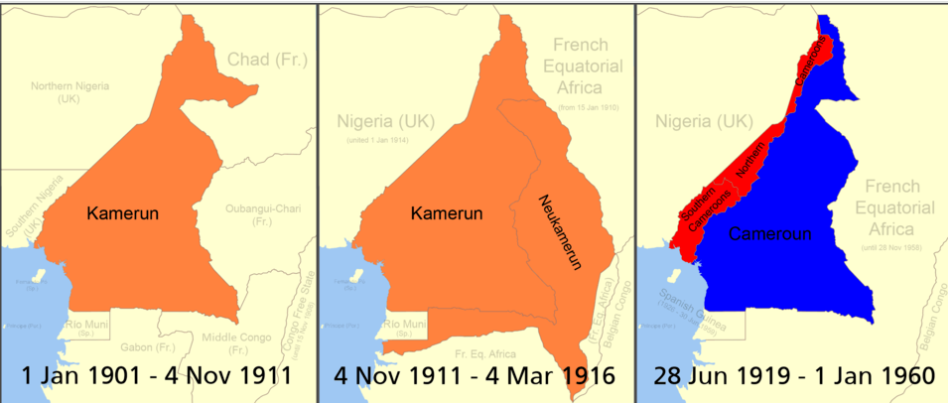
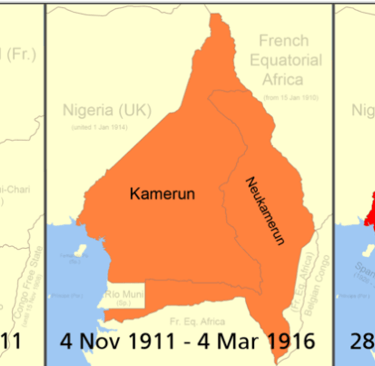
Understanding the difference between these two periods is essential for explaining why today’s legal questions are rooted in the UN system, not in the old German protectorate.
1. German Kamerun Was a Colonial Protectorate
Germany established “Kamerun” between 1884 and 1916. The territory was created by:
commercial treaties with local chiefs
expansion by German military campaigns
lines negotiated with Britain and France
But the key point is this: German Kamerun was a colonial creation, not a sovereign African federation. No African kingdom voluntarily formed a union under Germany. The borders were drawn for German interests, not for local political continuity.
German Kamerun ended entirely after Germany’s defeat in World War I. Once Germany lost its colonies, the protectorate dissolved in international law. It did not survive as a continuous political entity.
2. After World War I, the League of Nations Dismantled German Kamerun
When Germany lost the war, the League of Nations divided Kamerun into two separate mandates:
A French Mandate (larger portion)
A British Mandate (two non-contiguous strips)
These were not colonies. They were mandated territories, held in trust for the people who lived there. The goal was to prepare them for self-government, not to rule them forever.
This is where the legal story of Southern Cameroons truly begins.
German Kamerun was gone.
What replaced it was an international legal framework based on supervision, accountability, and eventual independence.
3. The UN Trust Territory Was a Completely Different Legal Entity
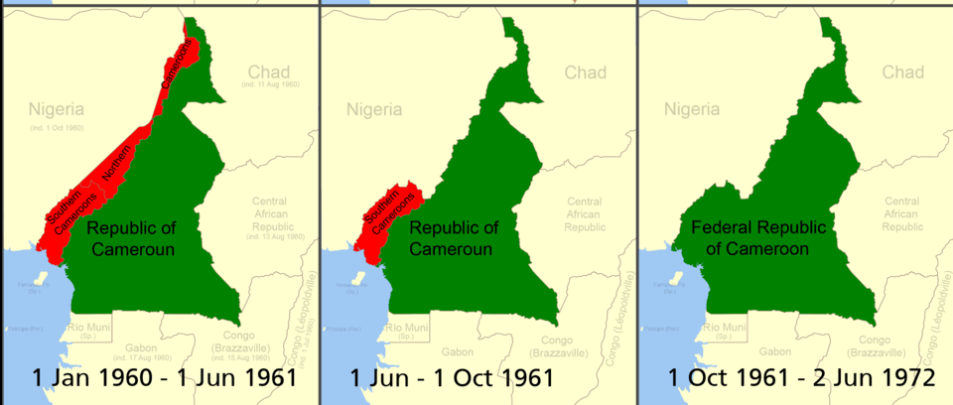
In 1946, the League of Nations mandate system was replaced by the United Nations Trust Territory system. Southern Cameroons became a UN Trust Territory under Article 76(b) of the UN Charter. This changed everything.
Now the territory operated under:
international law
supervision by the UN Trusteeship Council
annual reports
visits by UN missions
protection of the right to self-determination
Unlike German Kamerun, this system was transparent and rule-based. It recognized the people of Southern Cameroons as a political community with rights, not as subjects of a European power.
4. Self-Government in Southern Cameroons Was a Legal Status, Not a Colonial Invention
By the 1950s, Southern Cameroons had:
an elected government
a functioning House of Assembly
a Prime Minister
control over internal affairs
a recognized international personality under the Trusteeship system
This was not Germany’s doing. It came from the UN Charter’s requirements.
The people of Southern Cameroons were being prepared to decide their future, not to be absorbed by another state casually.
5. German Kamerun Boundaries Cannot Be Used to Justify the Post-1961 Union
Some argue that because Southern Cameroons was part of German Kamerun, it naturally belongs with La République du Cameroun. That argument fails for three reasons:
Reason 1: German Kamerun legally died in 1916.
There is no continuity between the protectorate and the states that came after.
Reason 2: The successor system was the UN Trusteeship, not colonial inheritance.
The Trusteeship system gave Southern Cameroons its own legal personality and its own right to self-determination.
Reason 3: Resolution 1608 required a union treaty.
If German boundaries were enough, the UN would not have required a tripartite treaty between:
Southern Cameroons
La République du Cameroun
The United Kingdom
The fact that a treaty was required proves that no automatic union existed.
6. The Final Legal Reality
The modern identity of Southern Cameroons is not based on German Kamerun. It is based on:
the League of Nations Mandate
the UN Trusteeship
Article 76(b)
the 1954 autonomous government
the 1961 requirement for a formal treaty
The issue today is simple:
Southern Cameroons was never absorbed through a signed union treaty, which was the only legal way for a UN Trust Territory to join another state. Since that treaty was never completed, the so-called union exists only in assumption, not in law.
7. How to Use This in Public Conversations
Here is the most effective line to share:
German Kamerun ended in 1916. The legal identity of Southern Cameroons comes from the UN Trust Territory system, not from German colonial borders. And under that system, only a signed union treaty could create a legal union with La République du Cameroun. No such treaty exists.
Contact
Reach out for research inquiries or collaborations.
Phone
+1 (281) 315-9387
© 2025. All rights reserved.

